PFIC Tax Reporting for U.S. Expats | Canada-US Tax Experts
Specialized Form 8621, QEF, and MTM elections with accurate, compliant filings.
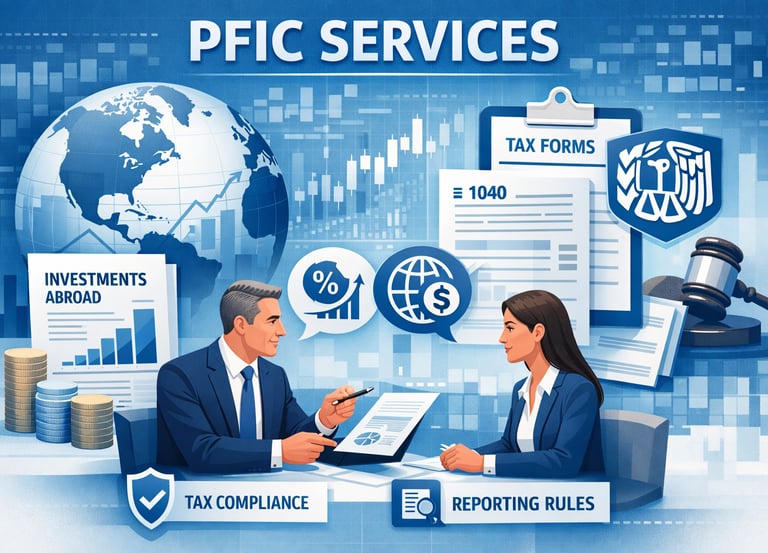
U.S. expats living in Canada often discover PFIC rules the hard way. Canadian mutual funds, ETFs, and certain pooled investments can trigger complex U.S. tax reporting, punitive tax calculations, and years of retroactive exposure if handled incorrectly.
Cathy Lalonde Tax specializes in PFIC tax reporting for U.S. individuals, with particular expertise in Canadian mutual funds, Form 8621 filings, and PFIC elections. Our approach is accurate, compliant, and tailored to your specific investment history.
Many clients don’t know they own PFICs until penalties appear.
We review your Canadian and non-U.S. investments to determine which holdings qualify as PFICs under U.S. tax law. This includes Canadian mutual funds, ETFs, income trusts, and certain managed portfolios.
You’ll receive:
Clear identification of PFIC vs non-PFIC assets
Explanation of why each investment qualifies
Guidance on next steps before filing begins
This step prevents unnecessary filings and ensures nothing is missed.
PFIC Identification
& Investment Review
Form 8621 is the backbone of PFIC compliance and one of the most misunderstood U.S. tax forms.
We prepare and file Form 8621 for each PFIC, ensuring:
Correct classification of distributions and dispositions
Proper year-by-year income allocations
Accurate reporting aligned with IRS requirements
Whether you hold one PFIC or many, filings are completed carefully and consistently to avoid red flags and future audits.
Form 8621 Preparation & Filing
Choosing the wrong PFIC election can permanently increase your tax burden.
We analyze whether a Qualified Electing Fund (QEF) or Mark-to-Market (MTM) election is appropriate based on:
Investment type and availability of AIS statements
Holding period and prior PFIC history
Long-term tax impact
We explain the pros and cons in plain language and implement elections correctly, including late or retroactive elections where permitted.
PFIC Election Analysis
(QEF vs Mark-to-Market)
When no election is in place, PFICs fall under the default excess distribution regime, often resulting in higher taxes and interest charges.
We handle:
Complex excess distribution calculations
Allocation of income across prior tax years
Interest charge computations required by the IRS
These calculations are technical, time-intensive, and error-prone without specialization. This is where experience matters most.
Excess Distribution & Default PFIC Calculations
Discovered PFICs years later? You’re not alone.
We assist clients who:
Were unaware their Canadian investments were PFICs
Filed U.S. returns without required Forms 8621
Need to correct or amend prior filings
Our focus is on bringing you back into compliance while minimizing penalties and unnecessary exposure.
Late PFIC Filings & Compliance Catch-Up
PFICs held through foreign trusts, corporations, or managed accounts require additional layers of analysis.
We coordinate PFIC reporting with:
Foreign trust filings
Complex ownership structures
Cross-border investment arrangements
This ensures consistent reporting across all required U.S. forms.
PFICs Within Trusts & Complex Structures
This service is ideal for:
U.S. citizens living in Canada
Dual citizens with Canadian investments
Americans holding Canadian mutual funds or ETFs
Clients with prior PFIC filing errors
Individuals with trusts or complex portfolios
If your investments feel “too complicated” for general tax software, you’re in the right place.
Who This Service Is For
PFIC rules are complex, but understanding them helps you make better investment and tax decisions. Below are in-depth resources written specifically for U.S. expats in Canada.
PFIC Resources for U.S. Expats


Canadian Accounts:
PFIC Exempt vs Non-Exempt
PFIC treatment depends on both the type of investment and the type of account. While certain Canadian retirement accounts are generally exempt due to treaty protections, most savings and non-registered accounts do not receive the same treatment under U.S. tax law.
In addition, exemptions rely on proper account qualification and reporting. Assumptions without professional review can lead to missed filings and long-term exposure.
PFIC reporting is not a DIY exercise.
Errors compound quickly and fixing them later is far more costly than getting it right the first time.
If you hold Canadian investments and file U.S. taxes, professional PFIC guidance matters.
Contact Cathy Lalonde Tax to discuss your situation and ensure your PFIC reporting is handled accurately and compliantly.
Contact
Get in touch for tax assistance.
Follow
Connect
cathy@cathylalondetax.ca
519-233-3588
© 2025. All rights reserved.